I did want to say one more thing about American Sniper. In the beginning the protagonist's father gives him a lesson as a kid in a flashback. He tells him that there are sheep, there are wolves, and that there are sheep-dogs. The first are weak and don't stand up for themselves, the second are evil/mean and prey on others, and the last group stands against the wolves and protects sheep. The father threatens to beat or punish his kids for being either the first or second and proposes to raise them as the third.
I thought this was a poignant way to discuss egoism and altruism and their eventual balance in the phallic trito.
However, this picture is very mechanistic and doesn't show the psycho-dynamics that can take place.
Freud holds there are both aggressive and affectionate id drives and egoism and altruism are easiest to see in relation to these.
The egoist, as opposed to the person functioning with full psychic bisexuality, has a block on affection. They strike one as serious, cold, business-like, etc.
The altruist has a block on aggression. They strike one as timid and bashful and won't stand up for themselves, but their affection whether for children, for the suffering, or wanting to be hugged and "cuddle" is there.
However, this can be reversed because of psycho-dynamics. I've seen overcompensated affection in some object egoists who are very 'bitchy' and judgmental of others but have a relationship with a puppy or child in which they lavish a sick affection on them. I've also seen overcompensated aggression in object altruists in which they can be impulsively violent and don't have a problem hurting those who are much weaker, while the subject egoist would ignore those so far beneath him.
The psychopath has always struck me as a designation for the criminal subject egoist. He's a gangster type.
The anti-social has mostly seemed a compensated altruist. While previously wanting approval from others, they have received enough injuries and now are misanthropes who think everyone is alone in the world and they don't have problems stealing or committing crimes to get by. Again, they don't strike one as wanting to be admired for their physical or intellectual potency as the psychopath does, they just commit crimes because people are rotten and so they are too and they need their drugs or they don't have the discipline or willpower to make good money in other ways.
Saturday, January 17, 2015

American Sniper- Anal ontology
I saw American Sniper last night. I think it's primary importance was ideological and re-writing the Iraq war as having a direct link to Al-Qaeda, but that doesn't interest me here. Rather, it's psychoanalytic importance is in a subject egoist's encounter with 'the butcher'.
The protagonist is the best sniper with the most kills and this locates him at the anal level of Being. Although, his main focus seems to be fighting against his double, Mustafa, a Syrian sniper who also has a family and is a crack shot, behind Mustafa is 'the butcher'. The butcher dismembers his enemies and is shown using a drill on a child's limbs. In the evacuated cities the butcher is the law and keeps the locals in fear. He doesn't have a position at the top of social hierarchy as a president or someone with official political or legal power, but represents a greater power behind this.
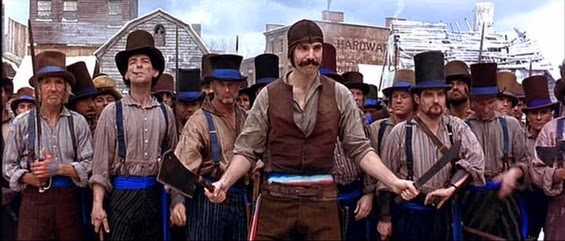
This is similar to Gangs of New York where there is a gangster, 'the butcher,' who similarly has such unofficial power and owns the police there.
In Game of Thrones, the structural equivalent is Tywin Lannister who is the true power behind the throne. When he is first introduced in season 1 he is butchering a deer.

I don't think it's coincidence that he loses his life while in the privy (on the toilet) and that he's killed by his son who is a dwarf which emphasizes him being much taller/greater.

I've discussed the importance of beheading as a form of death that is prominent in the anal electra complex. In the parallel oedipus complex at the anal stage dismemberment from 'the butcher' seems to be the corresponding type of death.
Additionally, at the anal electra complex I've mentioned female patients who only date black men (or the racial other that exists in their culture). These patients represent the men of the racial other as superlatively desiring them. Baines in The Piano is 'half-native' with his tribal facial tattoos and occupies this structure for Ada. In American Sniper the word 'savage' is used many times to talk about the Al-Qaeda butcher and the men who follow him. The same ontological, racial other is in evidence here.
Additionally, I've also indicated that in The Piano and in several patients there seems to be a displacement downward from above: the interest in beheading becomes an interest in the feet. Several OE patients have had a strong interest in shoes, finding feet disgusting, or have an interest in keeping their shoes as clean and shiny as possible. It seems that a similar logic may apply to the impulse of dismemberment. Instead of the loss of limbs there is a compensatory valorization of the torso:


The pic in the middle is from searching okcupid shirtless. I've head often about the cliche of men posting pictures of themselves without their shirts. Although one can take it as a being part of the OE libidinal position, I think this is wrong. Often subject egoist's try to impress women with 'mansplaining' or trying to show off their potency. This isn't the same as causing desire but rather assuming that to show that they are the best or most potent will see them win the woman as a trophy- causing desire is different. When Baines shows himself naked to Ada in The Piano he doesn't have a superlative body and neither are there other moments in the film in which he tries to establish his potency. A single act alone is hard to interpret but if you study the person's behavior over time in several types of relations (i.e. with peers, with superiors, romantically, etc.) then it's much easier to get a sense for it.
I've also pointed out several times before that erotogenic zones are shared in the masculine and feminine. Oedipus and bellerophon both involve the lion and blindness, electra and antigone both involved a representation of the self as brother and an attack on the parental couple. The classic active-passive distinction regarding id drives is at work here.
The dismemberment id drive is also found in Dionysus who I've linked to object altruism and together with subject egoism is 'the masculine' in the drives.
The protagonist is the best sniper with the most kills and this locates him at the anal level of Being. Although, his main focus seems to be fighting against his double, Mustafa, a Syrian sniper who also has a family and is a crack shot, behind Mustafa is 'the butcher'. The butcher dismembers his enemies and is shown using a drill on a child's limbs. In the evacuated cities the butcher is the law and keeps the locals in fear. He doesn't have a position at the top of social hierarchy as a president or someone with official political or legal power, but represents a greater power behind this.
This is similar to Gangs of New York where there is a gangster, 'the butcher,' who similarly has such unofficial power and owns the police there.
In Game of Thrones, the structural equivalent is Tywin Lannister who is the true power behind the throne. When he is first introduced in season 1 he is butchering a deer.
I don't think it's coincidence that he loses his life while in the privy (on the toilet) and that he's killed by his son who is a dwarf which emphasizes him being much taller/greater.
I've discussed the importance of beheading as a form of death that is prominent in the anal electra complex. In the parallel oedipus complex at the anal stage dismemberment from 'the butcher' seems to be the corresponding type of death.
Additionally, at the anal electra complex I've mentioned female patients who only date black men (or the racial other that exists in their culture). These patients represent the men of the racial other as superlatively desiring them. Baines in The Piano is 'half-native' with his tribal facial tattoos and occupies this structure for Ada. In American Sniper the word 'savage' is used many times to talk about the Al-Qaeda butcher and the men who follow him. The same ontological, racial other is in evidence here.
Additionally, I've also indicated that in The Piano and in several patients there seems to be a displacement downward from above: the interest in beheading becomes an interest in the feet. Several OE patients have had a strong interest in shoes, finding feet disgusting, or have an interest in keeping their shoes as clean and shiny as possible. It seems that a similar logic may apply to the impulse of dismemberment. Instead of the loss of limbs there is a compensatory valorization of the torso:
The pic in the middle is from searching okcupid shirtless. I've head often about the cliche of men posting pictures of themselves without their shirts. Although one can take it as a being part of the OE libidinal position, I think this is wrong. Often subject egoist's try to impress women with 'mansplaining' or trying to show off their potency. This isn't the same as causing desire but rather assuming that to show that they are the best or most potent will see them win the woman as a trophy- causing desire is different. When Baines shows himself naked to Ada in The Piano he doesn't have a superlative body and neither are there other moments in the film in which he tries to establish his potency. A single act alone is hard to interpret but if you study the person's behavior over time in several types of relations (i.e. with peers, with superiors, romantically, etc.) then it's much easier to get a sense for it.
I've also pointed out several times before that erotogenic zones are shared in the masculine and feminine. Oedipus and bellerophon both involve the lion and blindness, electra and antigone both involved a representation of the self as brother and an attack on the parental couple. The classic active-passive distinction regarding id drives is at work here.
The dismemberment id drive is also found in Dionysus who I've linked to object altruism and together with subject egoism is 'the masculine' in the drives.
Sunday, January 11, 2015
primal scene repetition in subject altruism
In earlier posts I discussed the primal scene in altruism in relation to both pseudo-stupidity (a reaction to not wanting to know the truth about the phallic mother's betrayal in subject altruism) and having one's head spinning, going around in a whirlpool, being "flushed down the toiler," as one patient put it (the reaction to betraying the phallic mother and fearing her punishment in object altruism). In SA the main myth I've looked at is Perseus and the rescue of Andromeda and for OA the myth of Ixion was looked at (the latter being much more precise).
For subject egoism I've talked about the actual prima scene repetition in the form of cuckoldry. The SE repeats the trauma of the phallic mother betraying him with the father in the object drives or the trauma of being found impotent at his chosen skill or field in the ego drives. I gave the example of Gordon Ramsay making a living at the primal scene repetition in projective identification (i.e. he assumes the place of the parental imago and humiliates chefs who have chosen this field, who represent his self imago).
There is a similar repetition with the SA of course. After the encounter with the Medusa the next situation is the
rescue of Andromeda after the slaying of the sea serpent. Perseus claims
Andromeda for marriage but finds she is already engaged to her uncle who shows
up at the wedding to fight for her. Of course, as a hero myth, Perseus is able
to overcome her uncle by using Medusa’s head to turn him to stone but the ear
marks of the primal scene loss are clear.
This is, of course, the rescue fantasy and it is eminently related to subject altruism.
The ego drive SA primal scene is observable in many children’s cartoons. For example, in Inspector Gadget the titular character has a niece, Penny, and a
dog, Brain, that often ensure the inept Inspector survives and solves the case.
However, the dim-witted cyborg detective retains his fame but without Penny or
Brain getting any credit. To rescue the other’s fame (the object’s Prestige in
a generation or class above one’s) is met with zero recognition or approval and
this is a source of pain. Similarly, many people in the substance abuse groups
I run talk about 'Sir-save-a-ho' in which a man may rescue a
“fallen woman” with a bad reputation or in bad straits only to find her
cheating on him/bad-talking him/or abusing his money or possessions. The object drive repetition often sees the person staying with the beloved and coming up with excuses for them: "she gets stupid when she gets drunk but she doesn't mean it".
Sunday, January 4, 2015
Blank Space- Volar stage
Sometimes contemporary pop culture reaches me in my lonely tower. I was impressed when I found out this was a Taylor Swift song and especially by the acting (?) she does in the video.
I think that the "blank space" also nicely ties to the volar deutero stage and Odysseus calling himself 'Nobody' in his encounter with Polyphemus.
The feeling that one is a nothing and the other is everything (i.e. both man and woman) is something I've been posting about and trying to conceptualize in my patients.
In this song it seems like the subject altruist isn't the only "nothing" but that the object egoist too can feel a "blank space" in herself that must be filled with the "everything" romantic object. The difference seems to be, of course, that aggressive impulses are directed at the object in the OE but directed against the self in the SA.
More precisely, the aggression is towards the object's things (his car, his clothing, his pictures).
In the volar stage I've also discussed 'the home' as the first form of transitional object. This seems to go along with Klein's notion of the inside of the mother's body being important and the phantasy that there are other babies inside of there. In The Lost Boys there is a scene I didn't comment on in which the boys/vampires are all sleeping outside down in a cave when Sam et al go into the cave to kill them.
As important as these phantasies may be in Kleinian technique, what interests me theoretically is their 'depersonalized' aspect in both ego drive and object drive relations. I've had a patient who found her boyfriend with another woman soon after their breakup and who went to his next party (so he wouldn't know it was her) and clogged his toilets, put salt in his washing machine to rust it out, stained his carpets, etc.
So, following the structure of the phallic trito father complex in which love of the parent becomes subject to the incest taboo and is reconfigured as love for a sibling, I've had the idea that attachment to the house, as a transitional object for the father-substitute, would become reconfigured as attachment to things or possessions.
In the trito stage of the phallic father complex the incestuous feelings for siblings has to be renounced in order to traverse the father complex and form 'genital' character. Similarly, the attachment to, or relations with things or possessions, which seem to be exchangeable for imago relations (i.e. both ego and object drive) in general, have to be renounced. (In Kleinian terminology, this if a full internalization of the object).
So, the woman in the video hasn't defused from the volar Elektra complex to attack the object's house, but still has an overly intense relationship with a sibling substitute because she hasn't renounced her desires to form volar trito drives/ideals.
Additionally, the volar deutero, as with every psychosexual stage, means a low ego ideal in which emphasis on drive related striving is diminished and feelings of entitlement to have the authority of the father-substitute, or be important to him/her, is central.
The proto-drives of the volar stage are intense. They represent the need to have others feel awe and wonder at you and for the person to feel the pressure to be something greater than human, or a singularity/name in history, to be immortal...
The deutero-dimension, in which the hand is the part-object for the masculine, means that sleight of hand/magic tricks in which you get the brief sense that you caused awe or wonder in people is a form of the low ego ideal and sense of entitlement to the authority of the volar/immortal fathers. (This is for subject egoists, where object altruists might also just want to cause delight or mystery for others)
In the second verse we find:
Cherry lips
Crystal skies
I could show you incredible things
Stolen kisses, pretty lies
You're the king baby I'm your queen
Find out what you want
Be that girl for a month
But the worst is yet to come
Oh no
Screaming, crying, perfect storms
I could make all the tables turn
Rose garden filled with thorns
The emphasis is on the man being 'the king' and the woman making herself over into who she thinks he wants to be incredible to him. However, no one can live up to the volar stage idealization in the object drives and so, after feeling close to "the king" for a month, the object will invariably not give you the perfect mirroring you need or not seem as socially important as you thought they did, and the relationship falls apart.
I've identified kings before as anal stage rulers at the tops of social hierarchies, but they often have been seen as more than human or had their names recorded in history and seem immortal for certain periods of time so they can also clearly be volar father-substitutes. I say certain periods of time, because I wonder how many people study the history of their cultures and have to memorize all the kings there were? In contrast, Plato and Shakespeare will always be immortal as well as Napoleon for what they have done, not just because they happened to be born to a person in power.
... one last thought is that the status of language itself as a transitional object. I'm still with the hypothesis that the auto-erotic stage is the prime determinant on whether one becomes a true intellectual or not. It determines whether one is at home in the body or in the mind. This also seems like it would be the difference between a person loving possessions or things or loving words, maybe music, or something in the arts.
Blank Space
Nice to meet you
Where you been?
I could show you incredible things
Magic, madness, heaven, sin
Saw you there and I thought oh my god
Look at that face, you look like my next mistake
Love's a game, wanna play
New money, suit and tie
I can read you like a magazine
Ain't it funny rumors fly
And I know you heard about me
So hey, let's be friends
I'm dying to see how this one ends
Grab your passport and my hand
I could make the bad guys good for a weekend
[Pre-Chorus]
So it's gonna be forever
Or it's gonna go down in flames
You can tell me when it's over
If the high was worth the pain
Got a long list of ex-lovers
They'll tell you I'm insane
Cause you know I love the players
And you love the game
[Chorus]
Cause we're young and we're reckless
We'll take this way too far
It'll leave you breathless
Or with a nasty scar
Got a long list of ex-lovers
They'll tell you I'm insane
But I got a blank space baby
And I'll write your name
[Verse 2]
Cherry lips
Crystal skies
I could show you incredible things
Stolen kisses, pretty lies
You're the king baby I'm your queen
Find out what you want
Be that girl for a month
But the worst is yet to come
Oh no
Screaming, crying, perfect storms
I could make all the tables turn
Rose garden filled with thorns
Keep you second guessing like oh my god
Who is she? I get drunk on jealousy
But you'll come back each time you leave
Cause darling I'm a nightmare dressed like a daydream
[Pre-Chorus]
So it's gonna be forever
Or it's gonna go down in flames
You can tell me when it's over
If the high was worth the pain
Got a long list of ex-lovers
They'll tell you I'm insane
Cause you know I love the players
And you love the game
[Chorus]
Cause we're young and we're reckless
We'll take this way too far and leave you breathless
Or with a nasty scar
Got a long list of ex-lovers
They'll tell you I'm insane
But I got a blank space baby
And I'll write your name
[Bridge]
Boys only want love if it's torture
Don't say I didn't say I didn't warn you
Boys only want love if it's torture
Don't say I didn't say I didn't warn you
[Pre-Chorus]
So it's gonna be forever
Or it's gonna go down in flames
You can tell me when it's over
If the high was worth the pain
Got a long list of ex-lovers
They'll tell you I'm insane
Cause you know I love the players
And you love the game
[Chorus]
Cause we're young and we're reckless
We'll take this way too far and leave you breathless
Or with a nasty scar
Got a long list of ex-lovers
They'll tell you I'm insane
But I got a blank space baby
And I'll write your name
Thursday, January 1, 2015
terminology problem
I realized in a recent discussion that psychoanalytic terminology makes things very confusing for newcomers.
When Klein used object relations she was often talking about internal objects, which are the representations of parental and sibling imagos, in good or bad aspect, that are accompanied with part-object relations (i.e. feces, urine, etc.).
In my work I've tried to show that these aren't contingent or random. Although there are definitely non-universal adaptations they still must fit in the framework that I've classified between perfection and death. Although, the imagos usually only show up in these ways in borderline and psychotic individuals who have foreclosure of the paternal imago. When the paternal imago isn't foreclosed then the egoist's imago of the father is one who is supposed to lead the workgroup (phallic) or rule civilization (anal), or foster one in the workgroup, or form one for civilization (anal) for the altruist. These are in the ego drive aspect of, course.
All the internal objects relate to imagos that relate to certain ego and object drives whether they function or not (i.e. have been repressed).
Saturday, December 20, 2014
paranoia and dissociation (depression)
Before I turn to Klein I would first like
to say that social ontology illustrates that every level of development seems
to have a corresponding type of paranoia. The phallic level of having one’s
reputation ruined can be contrasted to the auto-erotic level and the father
imago of Space in which the ‘end of the world’ (and indirectly the paranoiac
along with it) is also a very easily recognized form which Freud (914b)
mentions in ‘On Narcissism’ (p. 76). At the anal stage there is the reference
to secret groups that have more power than the officialized institutions of
civilization (i.e. CIA, the Illuminati, etc.). I expect variations of these to
exist and that they might follow the proto and deutero distinctions, but I
believe that this will suffice to show the levels of Perfection that are in
play. The last level, the narcissistic, is the one that Klein and others make
the most of. Instead of a reference to social hierarchy the narcissistic stage
involves figures that aren’t referenced by their social power. So while there
are those that can influence one’s reputation at the phallic, or those that
belong to powerful, secret groups that will end one’s life at the anal, at the
narcissistic stage one’s “killer” or slanderer can be anyone. Although, this
“anyone” will be given the coloring of being magical, monstrous, or other-than-
human since the narcissistic stage references humanity in general (Economics,
p. ?). Additionally, as always, there might be some confluence at work with
other levels of Being. This means that someone at the top of social hierarchy
as a celebrity or powerful figure may be selected with both his or her
magical/monstrous aspects and position of power or influence is referenced too.
Although the specific content of the
phantasy involved in paranoia can reference the different levels of social
ontology, Klein’s analysis directs us to a stage specific etiology. However,
this stage changes. In one of her last accounts it is the auto-erotic stage
which seems primary. She writes:
I have formerly also
expounded my contention that paranoia is based on the distrust
and hate of the internalized penis of
the father (see in this connection my comments about the ‘Wolf
man’, Psycho-Analysis of Children, Chapter IX). Further work has led me
to link that distrust and hate of the
internalized penis of the father with
the relation to the mother's breast, for hate and
distrust of the breast are transferred to the penis of
the father. All these factors seem to me of importance in the
understanding of paranoia (Klein, 1961, p. 279).
Here she references the importance of the
part-objects of the auto-erotic stage and the transcription of power from the
(part) mother imago to the (part) father imago. As mentioned in Economics, Klein holds that anxiety
situations appear not just in triangular situations with father-substitutes but
also in the defence of projective identification in which one assumes the place
of the parental imago in order to project one’s triangular (including primal
scene) anxiety into another person. In this way paranoia enshrines the
triangular relation so that even when one assumes the position of the
father-substitute and identifies with someone of a lower generation/class/or
person of less prestige, in whom he causes anxiety, there is still the fear
that this person wants to usurp one and may actually be successful. Thus, in
the myth of the Greek gods, the basic state of paranoia is in the oracle
foreseeing that a god’s son will overthrow him and this is seen in Cronos, for
example, swallowing up all his children to avoid this[1].
In part-object language Klein writes that paranoia:
is an instance of
projective identification which is quickly followed by, and possibly
simultaneous with, internalization. The fear of the object attacked by
hostile projective identification (such as bad faeces put
into it) in turn increases the feeling that the object will intrude into the
subject. It is important to distinguish in analysis between this fear
of being intruded into by the object with whom projective
identification has occurred and the process of introjecting the hostile
object. In the former case the ego is the victim of the intruding object, while
in introjection it is the ego which sets the process in motion, even
though it is bound to lead to persecutory anxiety (279-280)
As investigated in the last chapter, Klein
appears to be differentiating projective identification from what was compared
to a vertical repression in which the need for punishment makes one get off on
bringing about castration anxiety from a father-substitute. So, Klein is saying
that non-verbal arrogant and vain behavior that induces a subject egoist’s
father-substitutes to attack his image and bring about his “castration”
(anxiety) is one thing, but that paranoia from the assumption of the place of
the father-imago is another thing[2].
Fairbairn (1952) also seems to agree that paranoia consists of something more
than just
“the projection of repressed impulses, as is commonly
supposed, but in the projection of repressed objects in the form of
persecutors” (p. 75). He uses “techniques” to describe the paranoid defense,
along with the others, and this implies that some operation involving the ego
and the repressed drive-object relation is in order, as opposed to just a
regression to a specific stage.
In Psychoanalysis of Children Klein (1932)
locates the etiology of paranoia in the “earlier anal stage” but in an earlier
work she clarifies that this is synonymous with Freud’s narcissistic stage (p.
207 fn). “My conclusions are in agreement with Freud's hypotheses,” she writes,
“according to which the fixation-points of dementia præcox [schizophrenia]
and paranoia are to be sought in the narcissistic stage, that of
dementia præcox preceding that of paranoia (Klein, Importance of Symbol,
p. 38). In this view, Klein seems to regard auto-erotic absolute narcissism
with narcissistic stage primary narcissism as closely related but recognizes a
difference between them in regard to etiology. This gives us an important
distinction between paranoid schizophrenia and paranoia in other forms that
don’t have the delusional certainty but have the same feelings that are also
mixed with borderline or neurotic doubt.
In ‘A
Contribution to the Psychogenesis of Manic-Depressive States’, as in many other
places, the reference to feces and part-object castration anxiety in many
stages is referenced. Thus, despite her desire to reference a certain stage as the stage of paranoia she continues to
recognize the confluence of many stages. Additionally, she notes that the “whole
object” of the anal stage exists in the paranoiac but that defenses from more
primitive or earlier stages will have a more profound influence on the
incapacity for later ego and object drives. She writes
The paranoiac, I should say, has also
introjected a whole and real object, but has not been able to achieve a
full identification with it, or, if he has got as far as this, he has
not been able to maintain it. To mention a few of the reasons which are
responsible for this failure: the persecution-anxiety is too great;
suspicions and anxieties of a phantastic nature stand in the way of a full and
stable introjection of a good object and a real one. In so
far as it has been introjected, there is little capacity to maintain it as
a good object, since doubts and suspicions of all kinds will soon turn the
loved object again into a persecutor. Thus
his relationship to whole objects and to the real world is still influenced by
his early relation to internalized part-objects and fæces
as persecutors and may again give way to the latter. It seems to me
characteristic of the paranoiac that, though, on account of his
persecution-anxiety and his suspicions, he develops a very strong and acute
power of observation of the external world and of real objects, this
observation and his sense of reality are nevertheless distorted,
since his persecution-anxiety makes him look at people mainly
from the point of view of whether they are persecutors or not. Where the
persecution-anxiety for the ego is in the ascendant, a full and stable
identification with another object, in the sense of looking at it and
understanding it as it really is, and a full capacity for love, are not
possible (p. 155, emphasis mine).
Three things are important in this passage.
The first is that Klein references that a ‘full identification’ or what I’ve
pointed to as the father complex or trito stage hasn’t been achieved at the
narcissistic stage. The second is that there are also part-object relations from
the auto-erotic stage that may occur simultaneously with the paranoia.
Generally, we can say that the earlier the defusion the more global and
powerful the problems with relating to others is[3].
The third is that at the narcissistic level of Being expressed here both the
fear of engaging with humans in general and in the specific ego functions of
the “acute power of observation” go together. In the narcissistic stage there
is a reference to an external object but, as I expressed in Economics, it is “incomplete” and the
drives to relate to it are expressed in omnipotent wishes when defusion exists
such as psychic powers, magic, “the secret”, or “evil eye”. Despite this,
however, the ego capacity of this stage still deals with perceptions of the
external world as opposed to the preoccupation with one’s inner world of
phantasy in the auto-erotic.
In Shapiro’s famous ‘Neurotic Styles’ the
rigidity of the paranoiac’s perception to investigate his environment, is the
objective basis for how the subject phantasy elements adhere to reality[4].
He also recognizes the assumption
of the father imago in the subject egoist as a form but also recognizes
paranoia in “furtive, constricted, apprehensively suspicious individuals” along
with the “rigidly arrogant, and more aggressively suspicious, megalomanic ones”
(p.54). However, the examples of rigid suspicious perception that he gives also
seem to range across social ontology. He mentions a patient who quickly scanned
his library and noticed a certain book (p. 58). A psychotic paranoid person I
worked with would read the paper and find references to himself by tangential
associations to the material. Thus, in contrast to social ontology, specific
ego functions may be more important in some forms of paranoia and the
illusions/delusions of social ontology may not be front and center.
In Economics
I referenced Freud’s notion of jealousy at the proto phallic or mother-complex
stage in which the individual notices that the love object’s attention or attraction
to another man is a cause for jealousy even though it may be unconscious for
her. In classic characterology, Reich holds that the phallic stage is the main
cause of paranoia. Reich writes that “almost all forms of active and female
homosexuality, most cases of so-called moral insanity, paranoia, and the
related forms of schizophrenia… belong to the phallic-narcissistic character
type” (p.219). However, Reich’s
phenomenological descriptions don’t separate the grandiose or megalomanic type
involve in projective identification and the “suspicious” individuals.
Following the centrality of the phallic
nuclear complexes we can surmise that the phallic stage is the starting point
for the paranoid defense. Then, secondarily, the anal, narcissistic, or auto-erotic
stages can provide coordinates for the social ontology of paranoia (reputation,
secret groups, end of the world) or the importance of the ego cognition
involved in the suspicion.
If we follow Klein then there should be a
schizophrenic stage (auto-erotic), a paranoid stage (narcissistic), and then a
depressive stage (anal) and she often regards the first two as similar (i.e.
paranoid-schizoid) but not identical. However, we also find in her work the
idea of persecutory and depressive anxiety that may not represent the vertical
axis but rather the horizontal axis of psychic bisexuality. This isn’t
necessarily a contradiction because she also recognizes that intermingling of
the active and passive poles and therefore, the anal stage may represent the
capacity for the egoistic pole to have depressive features due to this
intermingling. I must reserve judgment here until more clinical experience
allows me confidence in this matter.
Because of this intermingling, it should
also be salient that a parallel form of persecutory anxiety can arise in the
altruistic pole at the anal stage. I’ve had little clinical experience with the
grandiose type of subject egoistic paranoia, but enough to have a
phenomenological sense for it. However, I’ve had a lot of experience with the
altruistic form of paranoia. In this form individuals often don’t have
elaborated delusions but simply maintain that they are being hunted by the CIA,
police, FBI, etc. and often fear, or are on the look out for, helicopters,
suspicious buildings or vehicles, or the appearance of law enforcement leads to
intense fear and anxiety. The centrality of law enforcement is a solid link to
the anal stage social anxiety of the institution of law enforcement that
relates to the individual’s interaction with civilization. In contrast to the
grandiose SE paranoia which has anxiety related to projective identification
this form references parental substitutes that are seen as above one[5].
I think we should save paranoia as the
designation for the subject egoistic defense that is coupled with megalomanic
or grandiose features and for the altruistic variety in which reference to law
enforcement and the police is highly prevalent. The latter types seem to be an
instance of the projection of self-criticism onto the object. In social
ontology the object at the anal stage is civilization and the fear of the
police means that they don’t have to live with their conscience continually
attacking them. In this way both Klein’s formulation and Freud’s formulation
have valid insights and can be differentiated clearly in phenomenology and
reference to the relations to imagos. It is still important to acknowledge that
a person may actually function in another libidinal position but have suffered
defusion and enacted the paranoid projective identification defense in the
subject egoistic part of their personality. One patient who functioned
altruistically was a member of the masons and was interested in secret
knowledge and was paranoid of the CIA who seemed to be after him because he
grandiosely thought he had important secrets. However, his demeanor wasn’t
competitive and concerned with power but was deferential and supportive of
others and idealized others. Grandiosity could be inferred from having the CIA
watching him but it wasn’t manifested in how he acted with others. In
individuals with the subject egoistic position being dominant they are often
criminals and there is strong manifest aggression and superiority.
Conceptual clarity is important in these
matters and being able to judge that individuals are “suspicious” of others at
the narcissistic stage because of “magical thinking” shouldn’t be described as
paranoid. For example, in Tausk’s example of the influencing machine there are
phantasies of someone having their mind taken over, having their thoughts
“drained off,” feelings the loss of potency or power, being watched, and having
certain sensations or thoughts being caused[6].
I can understand how someone might call these suspicions “paranoid” but all
these examples cite a lack of separation from the social or sexual object that
illustrates a magical/supernatural connection that is a cause of anxiety.
Grandiose projective identification or people who often can’t say no to others
and are caring or warm to others but fear law enforcement for something wrong
they’ve done (anal) or loss of reputation (phallic) is salient. The latter
corresponds to those that fear being discovered as homosexuals in my experience
but I haven’t had a large enough experience to say this is exclusive to
altruism.
[1] Instead of
seeing the paranoiac indirectly fearing his own death in the end of the world
phantasy this reading implies that he himself is the world.
[2] This becomes
a strong reading of the oedipus myth in which Oedipus’ hubris regarding the
search for his father’s killer(s) becomes an incentive for Tiresias to appear
as someone who will tell him the truth. However, instead of being castrated
there is a self-castration.
There is also an interesting difference in the Kleinian
and Reichian/Fairbairnian position on the need for punishment being an ego
defence vs. Klein’s claim that it is a hostile introject.
[3] The paranoia
of one patient got so bad he moved onto government land so he could be alone in
the wilderness and not have to deal with people. This flight from otherness in
general, as opposed to the fear of engaging with others is illustrated in this.
[4] This should
be contrasted to the earlier auto-erotic level of perception in which
perceptions don’t concern human objects but details in the environment. Shapiro
similarly mentions the obsessive-compulsive character as having a rigidity
concerning noticing objects in the external world. As mentioned in Economics,
the trito or father complex stage in which the nuclear complexes are mastered
through instinctual renunciation exists also in pre-phallic stages. Therefore,
between auto-erotic phantasy and narcissistic stage wishes that still cognize a
human object we should find an auto-erotic trito stage in which external reality
(as opposed to phantasy) is established and a fixation on that external reality
is possible. Thus, without the auto-erotic trito being reached, Klein notes
that defences against the auto-erotic oedipal leads to a lack of interest in
external reality (“outside world”) and repression of the most basic relations
to others in the lack of affect and anxiety found in some people. Klein writes:
The ego's exaggerated and
premature defence against sadism checks the establishing of
a right relation to reality and
the development of phantasy. The further sadistic appropriation
and exploration of the mother's body and of the outside world (the mother's
body in an extended sense) are brought to a standstill, and this causes the
more or less complete suspension of the symbolic relation to the things
and objects representing the contents of the mother's body and, hence, of
the relation to the subject's environment and
to reality. This withdrawal becomes the basis of
the lack of affect and anxiety, which is one of
the symptoms of dementia præcox. In this disease, therefore,
the regression would go right back to the
early phase of development in which the sadistic
appropriation and destruction of the interior of the mother's body, as conceived
of by the subject in phantasy, together with the establishing of
the relation to reality, was prevented or checked owing
to anxiety (p. 39). Klein, M. (1930). The Importance of
Symbol-Formation in the Development of the Ego1. Int. J. Psycho-Anal.,
11:24-39
Hypothetically, the “living machine” form of
obsessionals with no emotions and no inner life would have defended against the
auto-erotic nuclear complex while having made it to the auto-erotic trito. In
Greek myth we find two opposed stories of the moon (Selene) and the dawn (Eos).
The former loved Endymion and the latter loved Tithonus. Endymion’s body stayed
youthful forever while remaining asleep while Tithonus chattered on endlessly
while his body aged. Placing these gods as prior to the rule of Cronos
(Time/the narcissistic stage) it seems probable that they relate to these early
functions of affect block and the other autistic trait of chattering endlessly
at people without noticing their disinterest or annoyance.
[5] In parallel, the primitive depression in
altruism also resembles projective identification in which the parental imago
is usurped and the individual feels outside of his body, in a black hole, wants
to disappear in sleep, or just “not present” or “out of synch” with others.
These are early forms of Death in which the parental imago is not there or
available and the child experiences abandonment or aloneness. There
is some obvious overlap with dissociative disorders in this formulation that,
again, makes the need for conceptual clarity very important.
[6] There is still some confusion for me about the narcissistic stage
as the encounter with otherness and the encounter with the transitional object.
From the work of Tausk and others it is apparent that things (transitional
objects) have a significance at the narcissistic stage and can be the cause of
powerful psychotic delusions and culturally often magic is attributed to things
(amulets, hats, wands, etc.). I’m not sure if the transitional object appears
in either the masculine or feminine lines of development, or if it is split
between the egoistic or altruistic poles, whether it is an object for both, or
whether it may appear in the narcissistic trito stage when the two poles become
more intermingled. In Economics I mentioned that the narcissistic stage
referenced anxiety situations in terms of the big bad wolf “huffing and
puffing” on the houses of the 3 little pigs and that I’ve worked with patients
who had a triangular situation with houses. I would like to say that just as
there is a move from the opposite sex parent in the phallic nuclear complex to
a sibling in order to respect the difference between the generations, that it
seems like there can be a move from the house to certain things/items in the
house on the way to the narcissistic trito. So far, in my clinical experience
the relation to the house and then items seems to appear in feminine patients
(OE and SA).
Tuesday, December 9, 2014
Young Melanie Klein

I had never seen this picture of her before yesterday. I just remember the bulbous faced and big chinned pictures of her when she was old. How dreamy she looks here. (Although, it feels like I'm holding this word by the tail so that it doesn't mean someone on a teenage poster. Maybe bedroom eyes is better...) How sensuous around the mouth. She looks like she is looking out at the world through a never lifting veil so of course she choose to look inward into her phantasies.
Subscribe to:
Posts (Atom)